EntOS Voice · Platform assistant design
From commands to an assistant across brands and devices
A voice interface can execute a command and still leave people unsure of what it understood, what it can do, or what to ask next. As our TV voice experience evolved into a conversational assistant, I shaped how it communicated its state, offered relevant possibilities, and behaved consistently across interfaces.
The work was for EntOS, a shared entertainment platform supporting Xfinity, Xumo, XClass, Sky TV, and future partners. We needed interaction patterns that could extend to new features and devices while feeling familiar to users and accommodating each brand’s identity.
TV was the starting point. The broader ambition included mobile experiences and situations where a phone and TV could work together.
My contribution
I defined the assistant’s states and communication requirements, directed motion design, and shaped speech feedback, response, and error behavior. I originated and advocated for smart suggestions, worked through their behavior with design and engineering, and guided the extension of shared patterns and capabilities into a mobile prototype. I also created mobile UI explorations to show how movie imagery could enrich the assistant’s text responses.
Project outcome
Delivery of production specifications and design assets for v1 of the EntOS assistant interface. Functioning TV and mobile prototypes supported development of smart suggestions and application of shared capabilities and interaction patterns across devices.
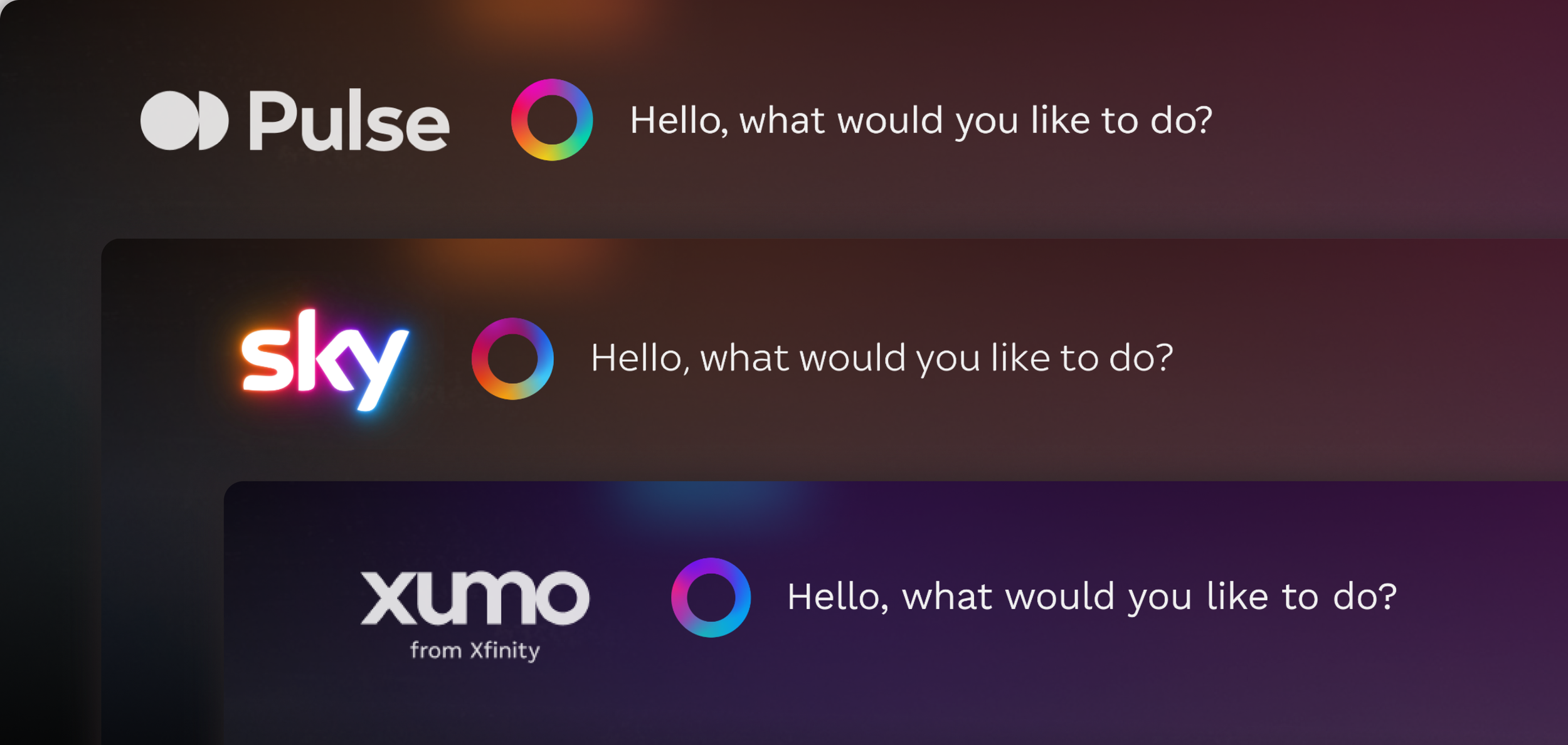
A shared assistant interface adapted to different brand identities.
Define how the assistant communicates
I established what each interaction state needed to tell the user: the assistant is ready, it is listening, it is processing, it has a response, or something needs attention.
Those requirements gave motion, text, sound, and recovery behavior a common purpose. The assistant needed to make its status understandable throughout the interaction.
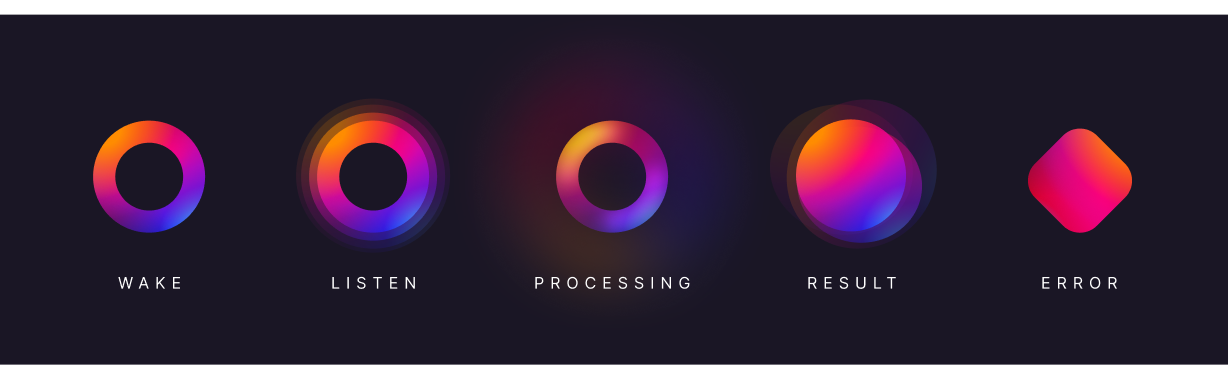
Visual treatments for the five assistant states, developed through motion design under my direction.
Turn the model into buildable behavior
Working from that direction, my designers documented the triggers, transitions, timing, and feedback for each state. The specifications connected system events to what people would see and hear, including speech transcription and the transition into a response.
This was where the interaction model became specific enough for engineering to implement.

Behavior documentation connecting user input, system states, sound, and visual feedback. ASR means automatic speech recognition, which converts speech into text.
Make listening unmistakable
The early sphere and halo explorations signaled assistant activity, but I did not believe they made the start of voice capture obvious enough. Users needed to know when the system was listening.
I made that explicit in the motion brief and directed Jonathan Alsop to explore a stronger signal. The resulting TV treatment combined the assistant icon with a full-width animation at the top of the screen, using branded colors and gradients.
The Everything App, a Xfinity mobile prototype effort, adapted the treatment to its bottom assistant input area. The placement changed to suit the phone; the requirement to clearly communicate listening carried across.
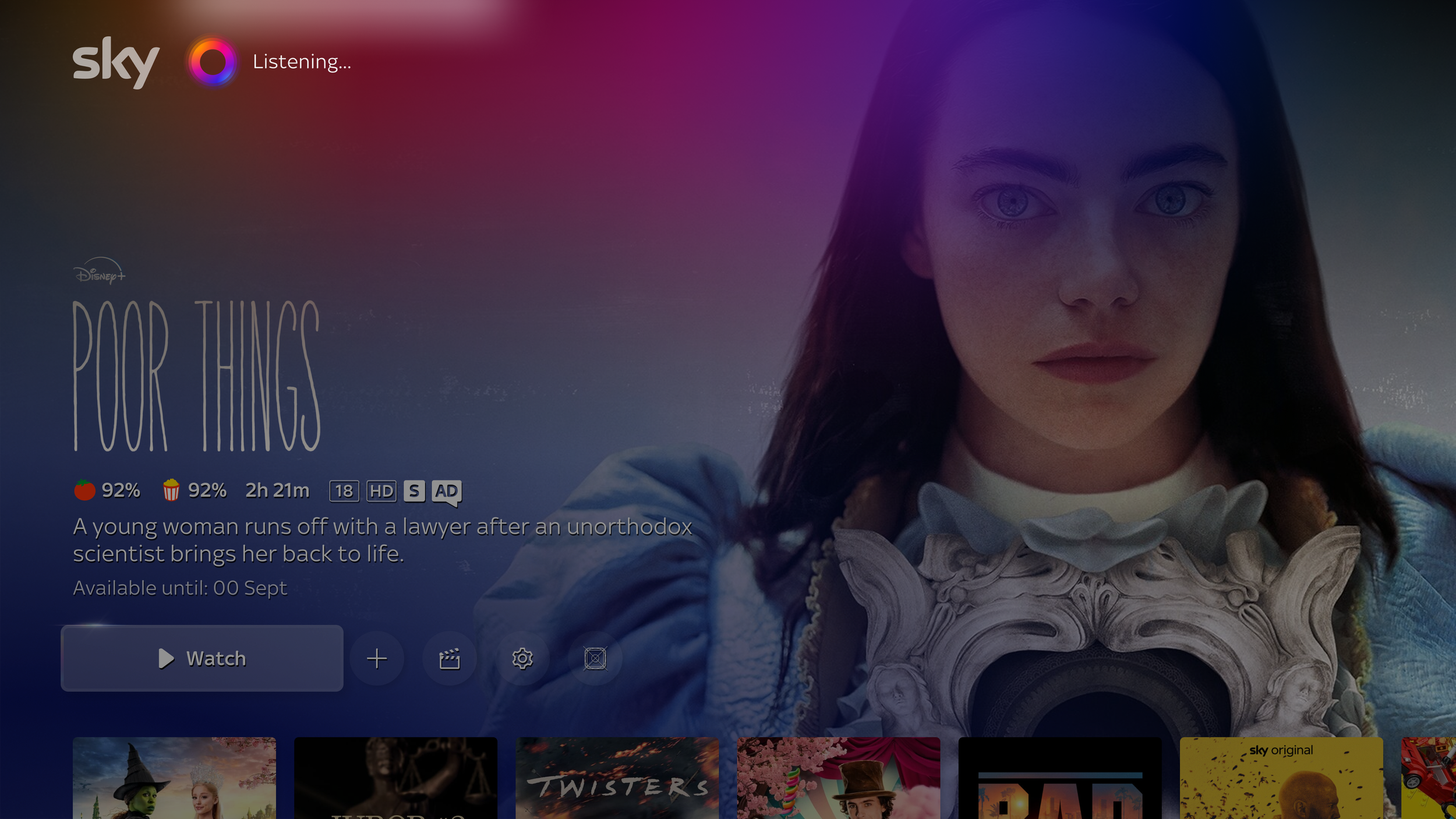
TV: the listening treatment extends beyond the assistant icon across the top of the screen.
Mobile prototype: the same communication requirement adapted to the bottom input area.
Anticipate what people might need next
I originated and advocated for smart suggestions to make the assistant more context-aware: able to surface relevant possibilities before someone had to work out what to ask next.
The goal was to use the person’s query, information about the content, and what they could access to anticipate useful questions or actions. Suggestions could help someone evaluate a movie, explore related content, or redirect their search while keeping them in control.
Richer responses with imagery and additional actions were outside the scope of early phases. I proposed bringing this intelligence into the existing assistant area, giving us a practical way to introduce anticipatory assistance within the interface we could deliver.
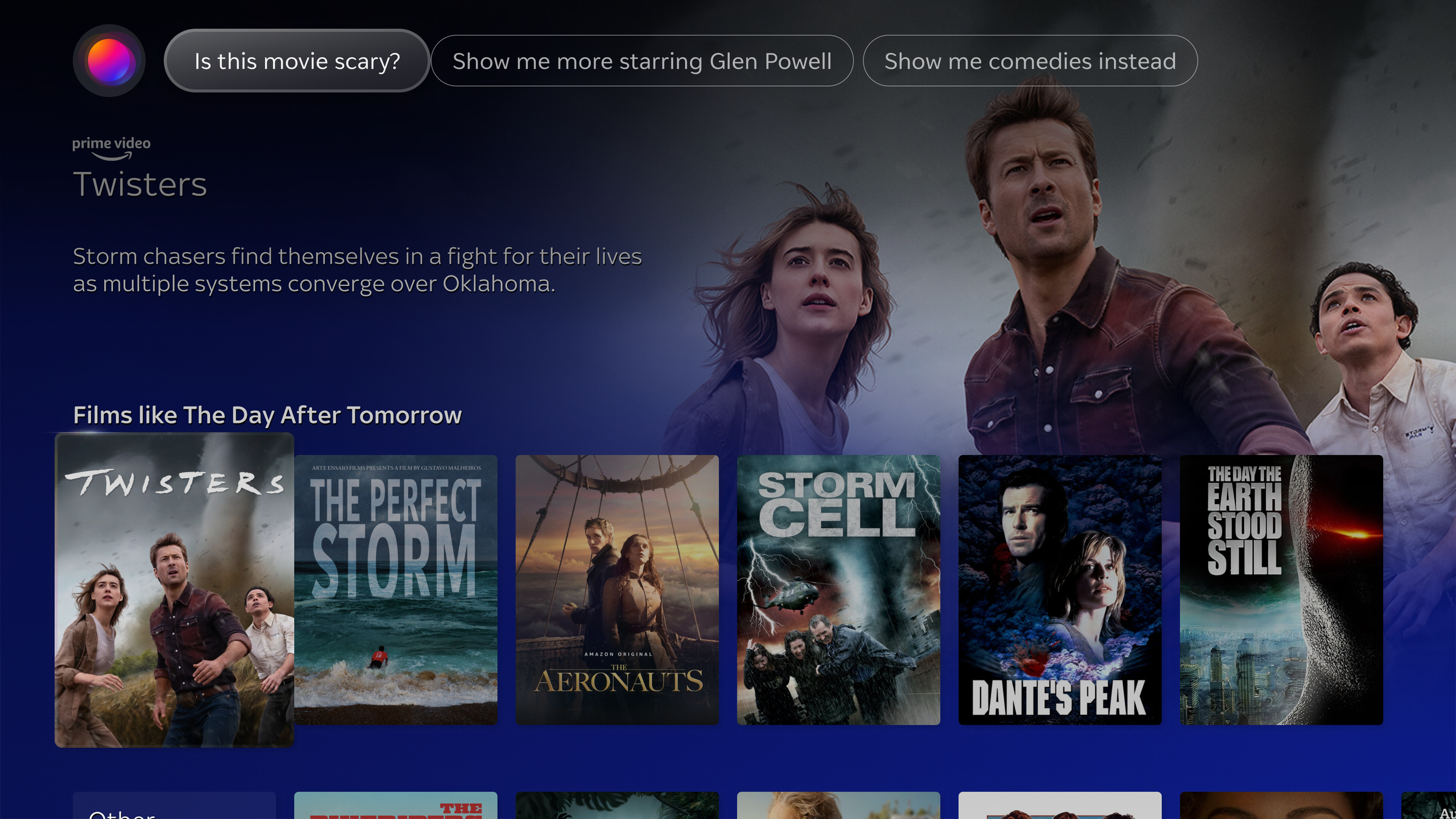
With Twisters selected, suggestions offer three directions: ask whether it is scary, explore more films starring Glen Powell, or switch to comedies.
With my designers, conversational AI designer Jenny Mero, and our prototype engineers, I worked through how suggestions would use the user’s query, descriptive content information, and subscription access to identify relevant possibilities. I also pushed for generated copy to fit our response containers and character limits. We developed these behaviors in a functioning TV assistant prototype.
Make the experience familiar as the platform grows
The shared patterns were designed to extend across features, devices, and partner experiences. Someone using Sky or Xumo should encounter recognizable signals for listening, processing, responding, and recovering from errors wherever they used the assistant.
I guided the Everything App’s application of our timing, animation, response wording, and error patterns. Its interface could adapt to the phone while preserving the communication requirements we had established.
The intelligence and content information behind suggestions also needed to work as a shared service. I kept that requirement active throughout development and ensured that the Everything App engineers implemented the capability in their mobile build. This put both the extensible interaction patterns and the reusable service into practice beyond TV.
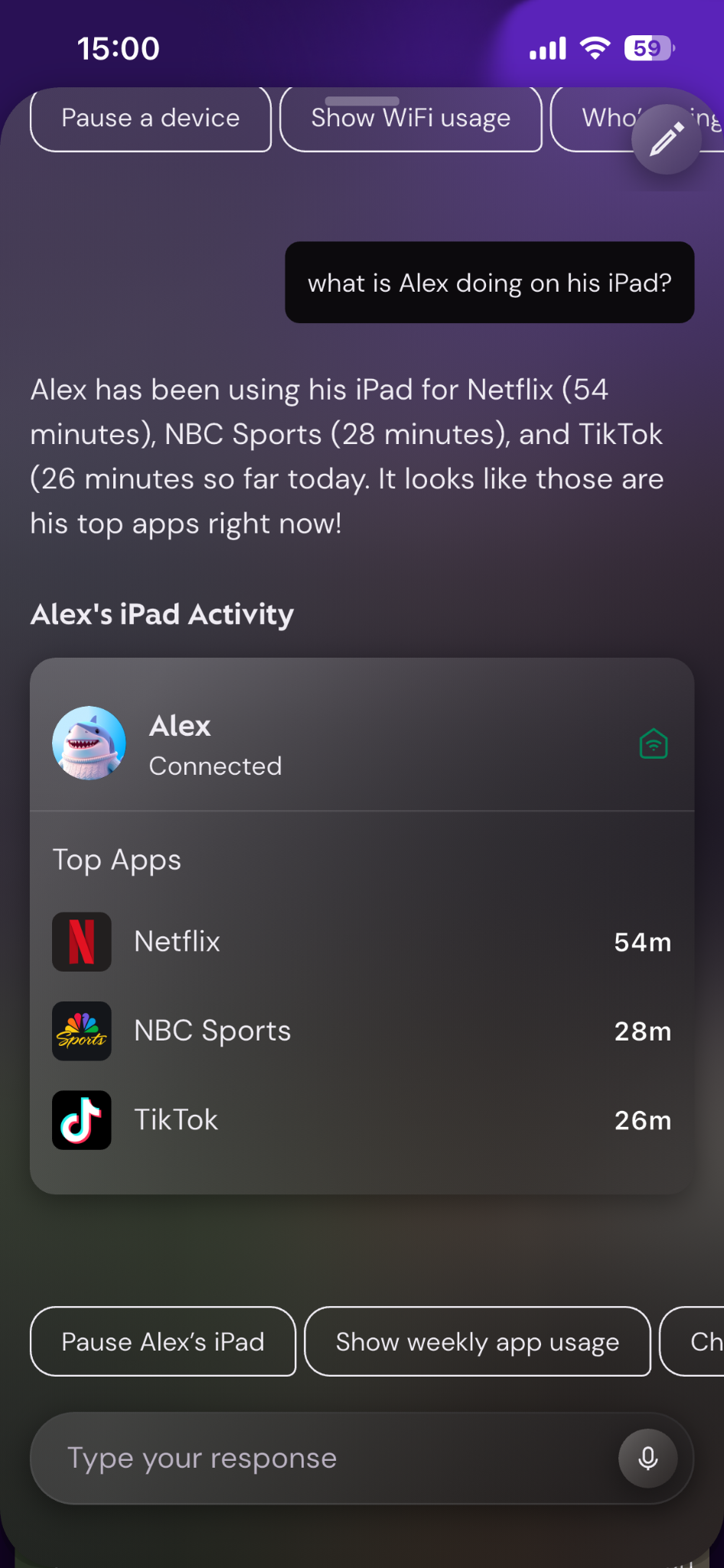
Smart suggestions in the mobile experience: a question about device activity leads to a usage summary and contextual options to manage the device or explore further.
Explore richer responses on mobile
I created quick mockups within a TV streaming app interface to explore how an assistant’s text response could be supported by movie imagery. These made the idea tangible for discussion as we considered richer responses beyond the initial TV interface.
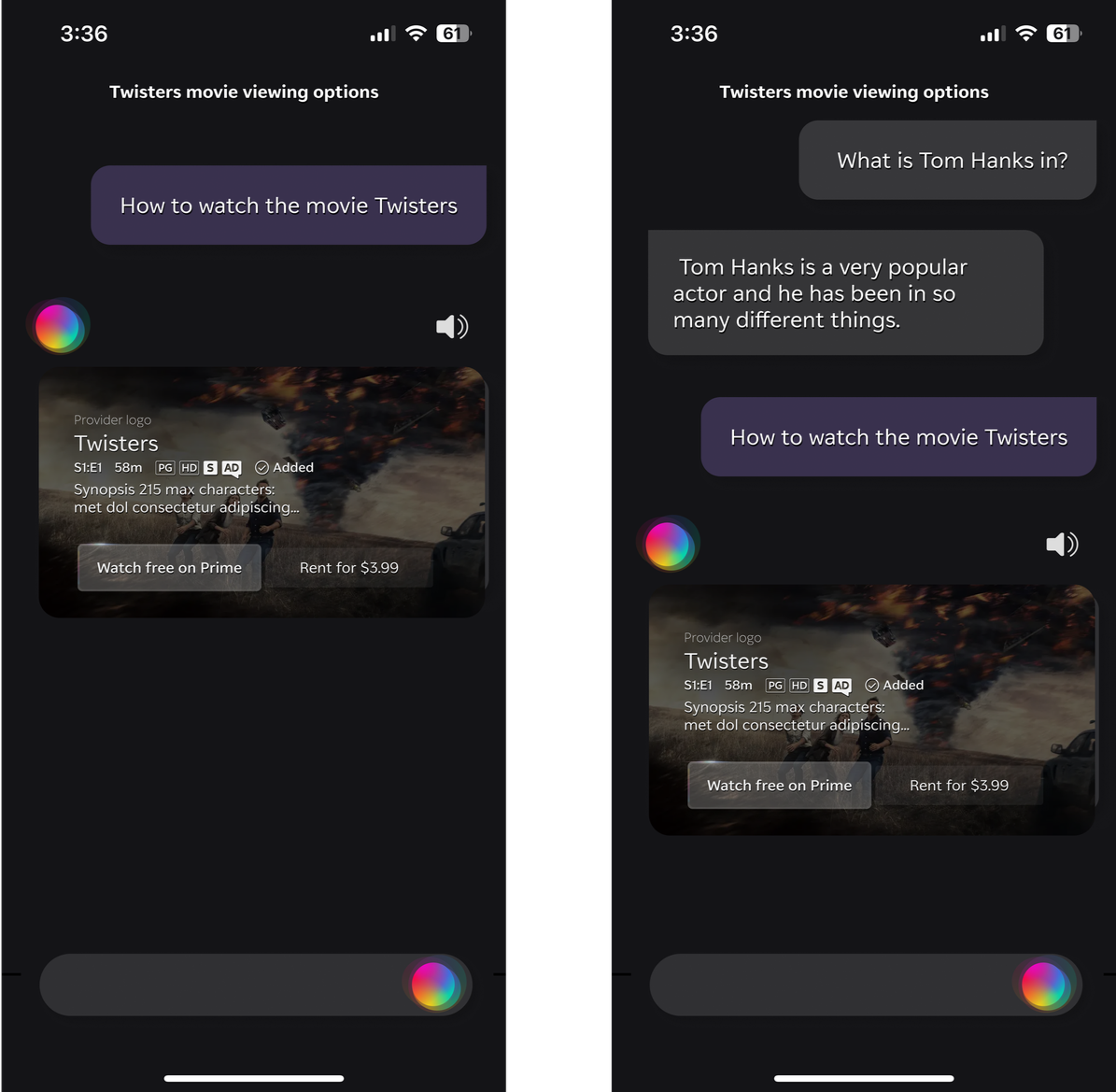
Mobile response exploration and its scrolled conversation history.
Deliver the foundation for v1
The project delivered production specifications and design assets for v1 of the EntOS assistant interface to the production development team.
Alongside that handoff, the functioning TV prototype brought smart suggestions into an interactive experience. The Everything App implementation demonstrated how the suggestions capability and shared interaction patterns could extend into mobile.
My contribution connected the definition of assistant behavior to detailed design, working prototypes, and production delivery.
Public preview: Sky Smart Voice
In September 2026, T3 covered a demonstration of Sky’s upcoming Smart Voice assistant on Sky Glass and Sky Stream. The preview showed the branded assistant overlay and described contextual follow-up questions, responses that preserve viewing, and visual feedback for listening and responding, bringing the interaction direction described here into a publicly demonstrated product experience.
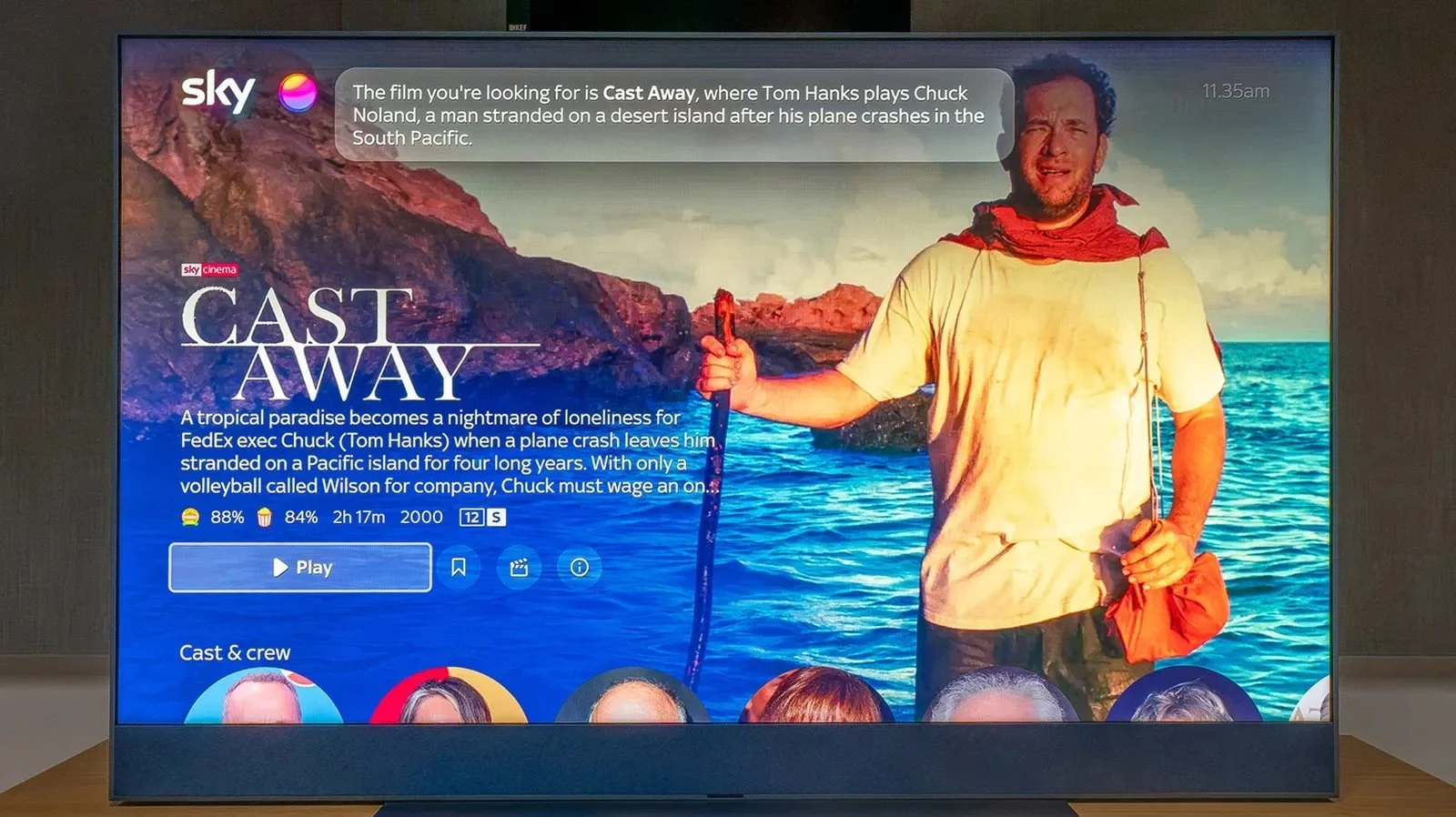
Photo: Rik Henderson / Future, via T3